
river island border bridge
introduction:
it is about a river. with the current, against the current. about the sound of the river.
it is about landscape. about its fieldnames.
and it is about a border . about stories of crossing borders.
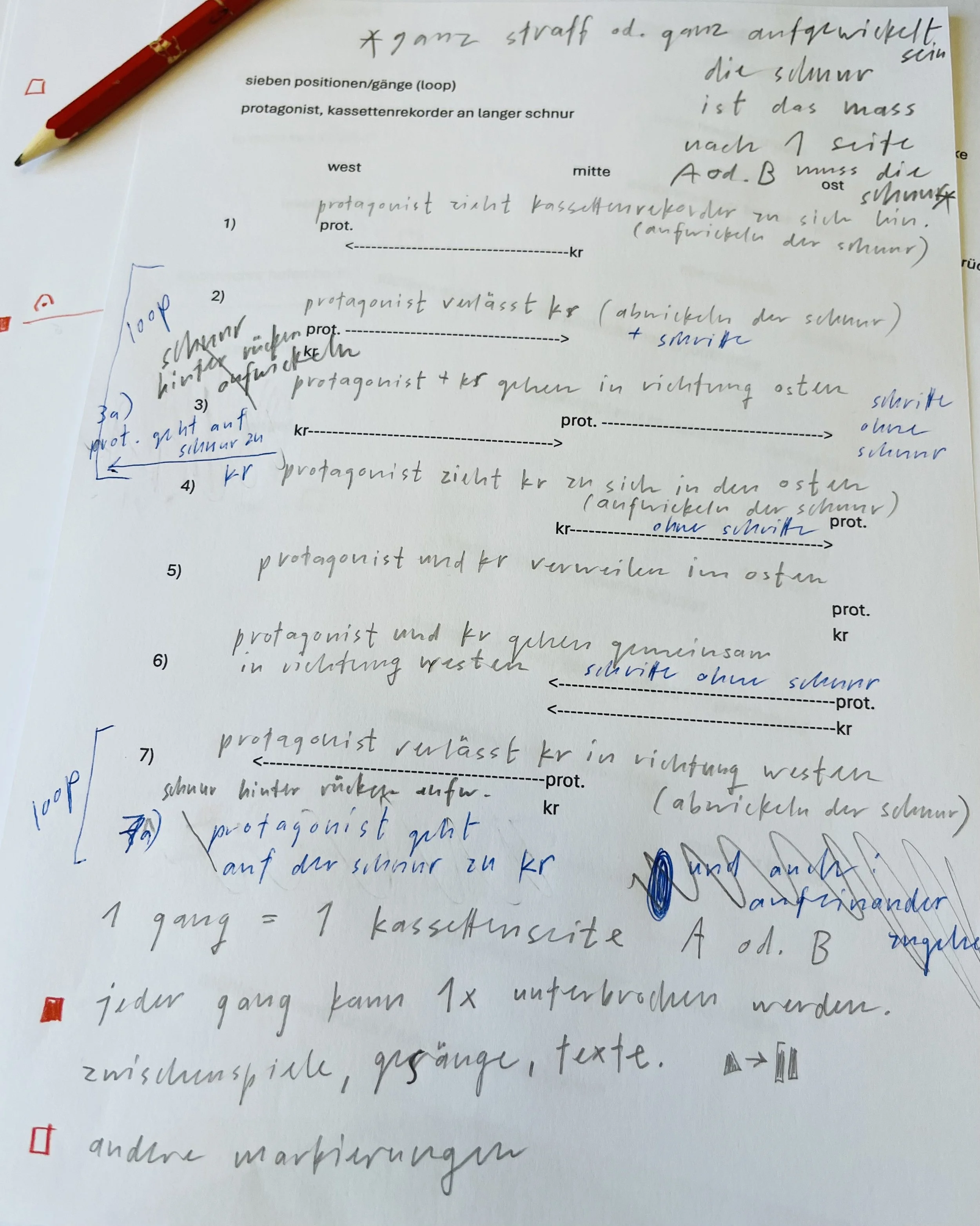
the piece has no beginning and no end. it is a large, almost endless loop. like a prayer or a compulsion.
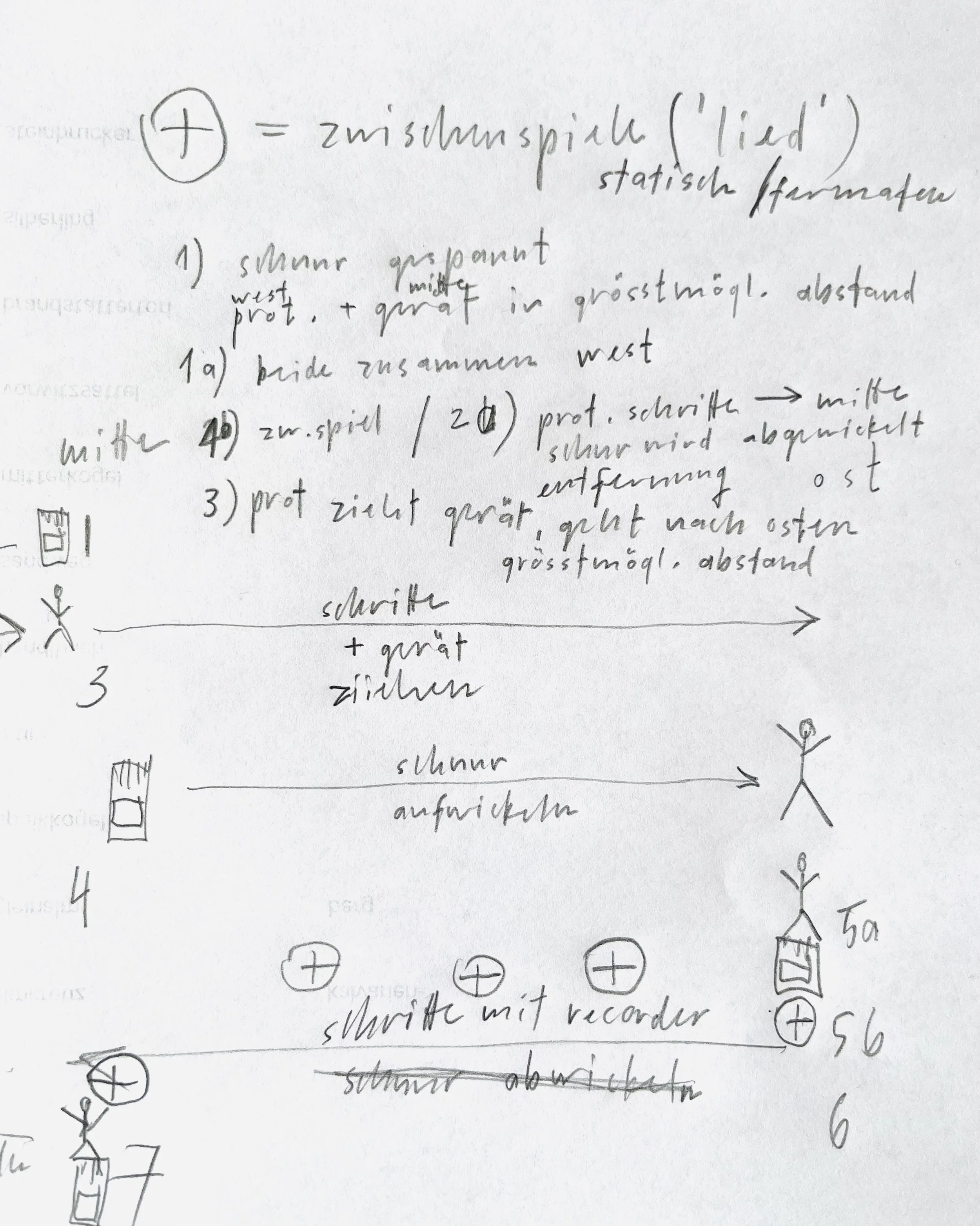
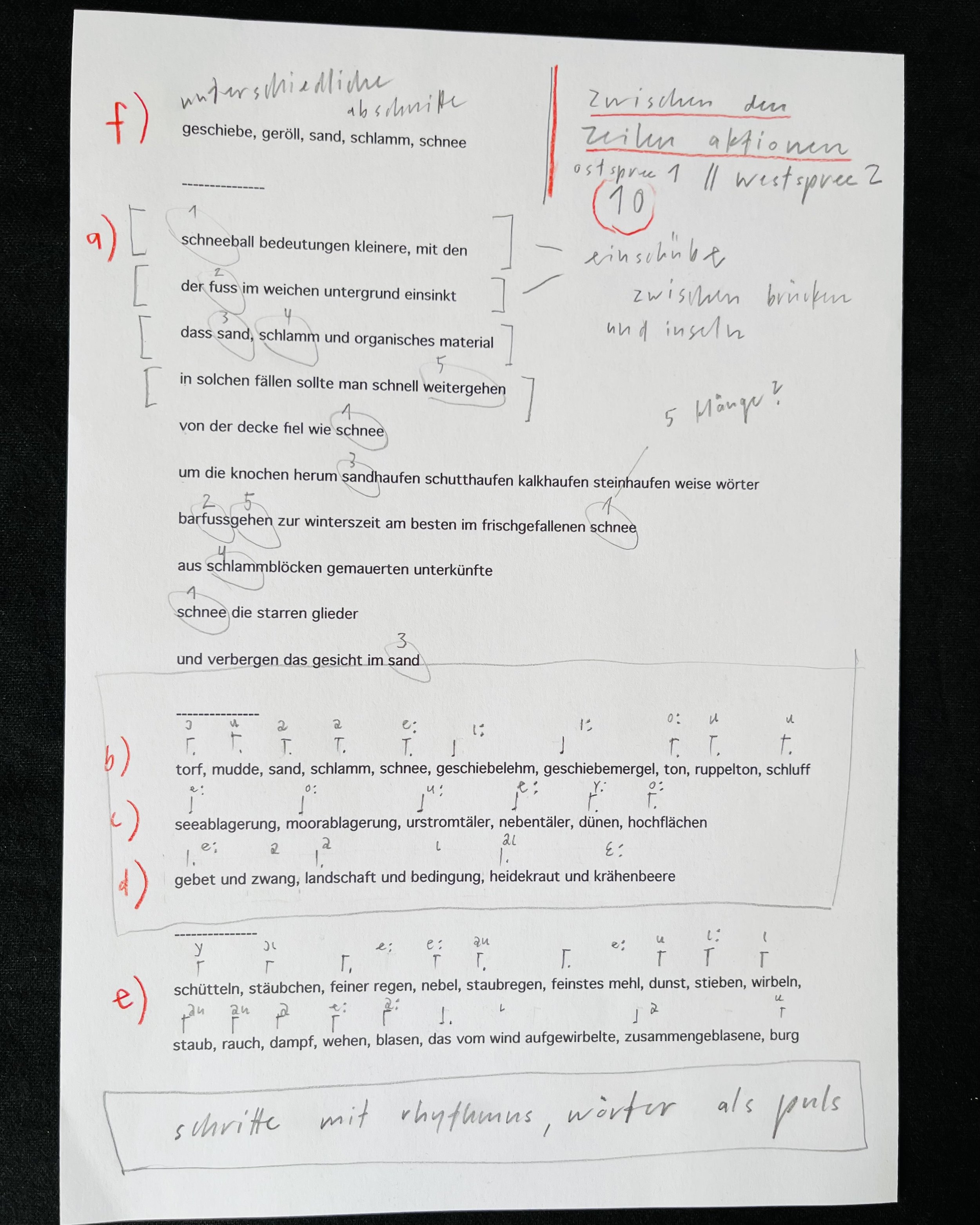
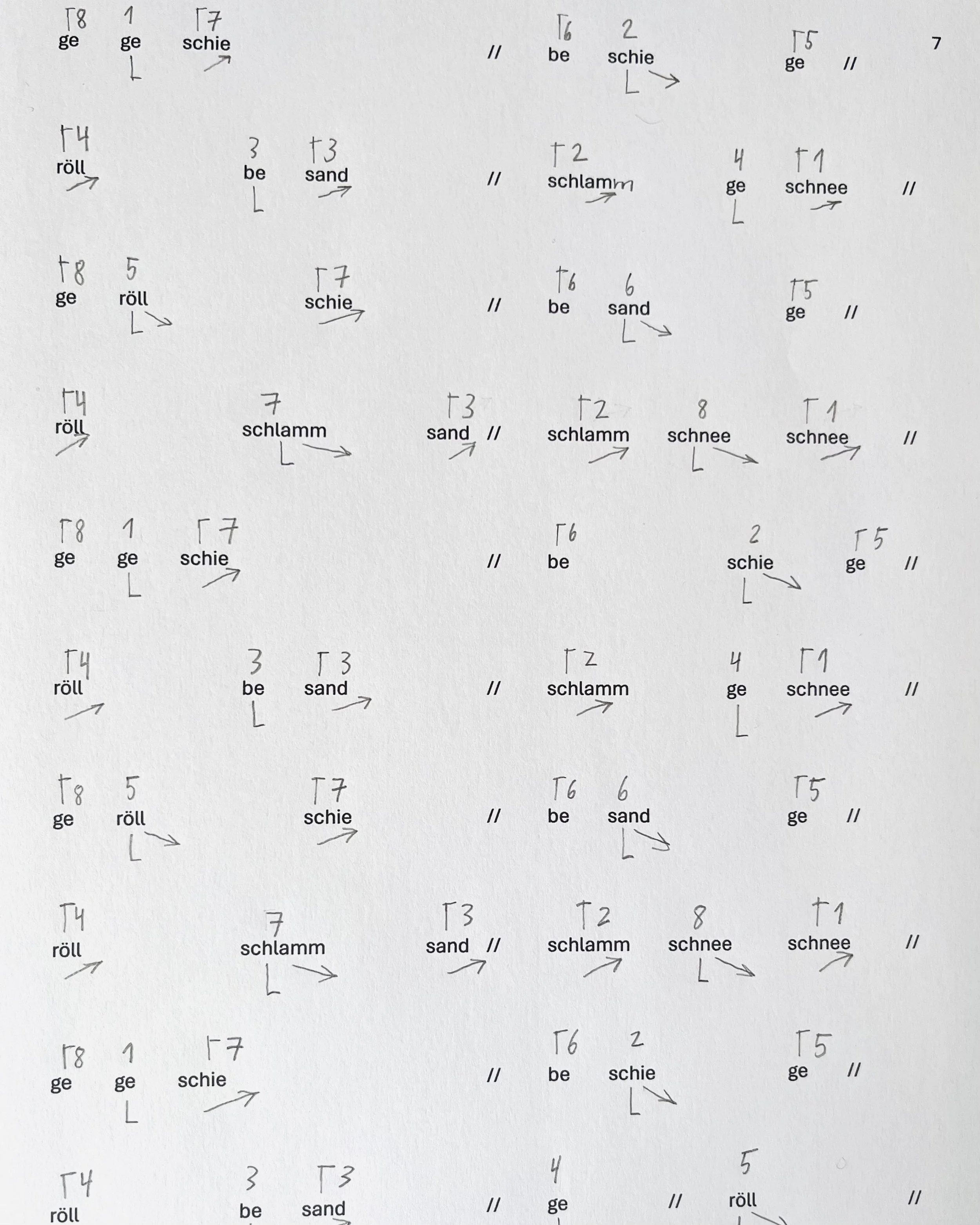
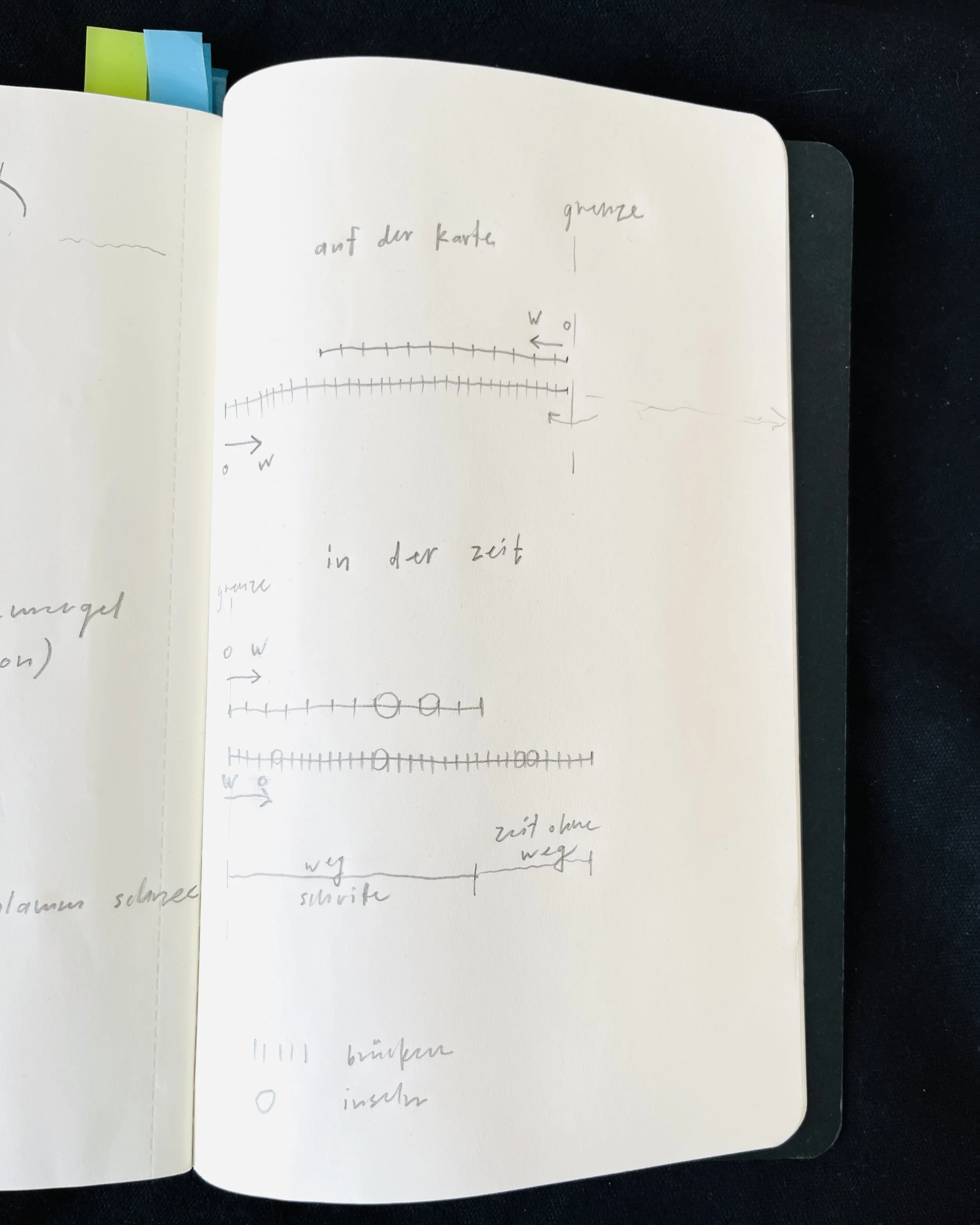
it is about steps, their rhythm. about ceaseless pacing and enumerating. names are spoken in the rhythm of the own steps. names of the surrounding landscape, of bridges, islands, sediment. ------------------
content1:
the piece is based on geological, linguistic, sonic and cultural studies of a landscape.
junction points and boundaries (both natural and culturally determined) are explored it is a form of musical theatre that is more ritualistic than narrative in character; it involves a pendulum swing – prayer and compulsion – within a defined framework (the content and duration of the cassette’s word list). it is a walking, a repeated walking, an insistence in ceaseless walking.
musical paths are trodden. yet these paths are also subtly subverted, altered, nuanced.
-------------
the polar bear at the zoo back then, walking from left to right, would suddenly turn his head with a flourish at the end of the far-too-small platform; his body would follow his head, and he’d walk from right to left. and so it went a thousand times, until suddenly the polar bear jumped into the paddling pool, only to climb back up onto the platform and carry on.
but what i saw as a child, or what i wished to see, were the tiniest differences. the touch of a paw, the scraping of a claw, the flick of an eye, the licking of lips, an ear pricking up, snorting, puffing, wagging its tail.
i was spellbound by this endless repetition, in which i sought to detect change.
--------------
nature as the cyclical. eternal loop
the zoo enclosure and the polar bear within it as the antithesis of nature. eternal loop.
i, as a human, between eternal loop and eternal loop;
landscape & condition, prayer & compulsion, heather & crowberry
---------------
content2:
the piece is a boundary-crossing duet. unison and counterpoint. hoquetus and heterophony. cassette (recorded speech by the protagonist) and the protagonist’s live voice and movement. what emerges from the tape recorder lies ‘beyond’ the boundaries of what is spoken, sung or danced live. it is a temporal framework drawn from the names of corridors, plants and bridges, and the ground conditions of the river landscape, which structures and gives rhythm to the events of this world: footsteps, speaking/singing, other actions. it is an audio score.
the spoken language, its sound and rhythm (cassette), generates cues, durations and the pulse of the protagonist’s actions.
------------------
tape recorder:
there is an a-side and a b-side to the cassette; the sides are switched after each ‘run’. by flipping the cassette, the protagonist adopts and incorporates the other side of the score. words, songs, choreography and stories change as the cassette is flipped.
at the same time, the cassette can be paused (pauses, refrains, digressions) or even overwritten (rec) with new words or names, with current, articulated found objects from the surroundings.
the content of the cassette is thus overwritten during the performance. landscape overwrites landscape. names overwrite names.
each performance allows its audio score—and thus the piece—to be condensed, altered, or made to disappear.
---------------
where the play is created, where the play is performed:
relocating, transplanting, immigrating:
one landscape moves into another landscape to settle there temporarily.
nomadism. a landscape can be relocated/repositioned many times and subjected to new circumstances. the berlin spree is transplanted near a finnish lake. densification/migration/exile – crime and utopia of landscape & condition
---------------
material:
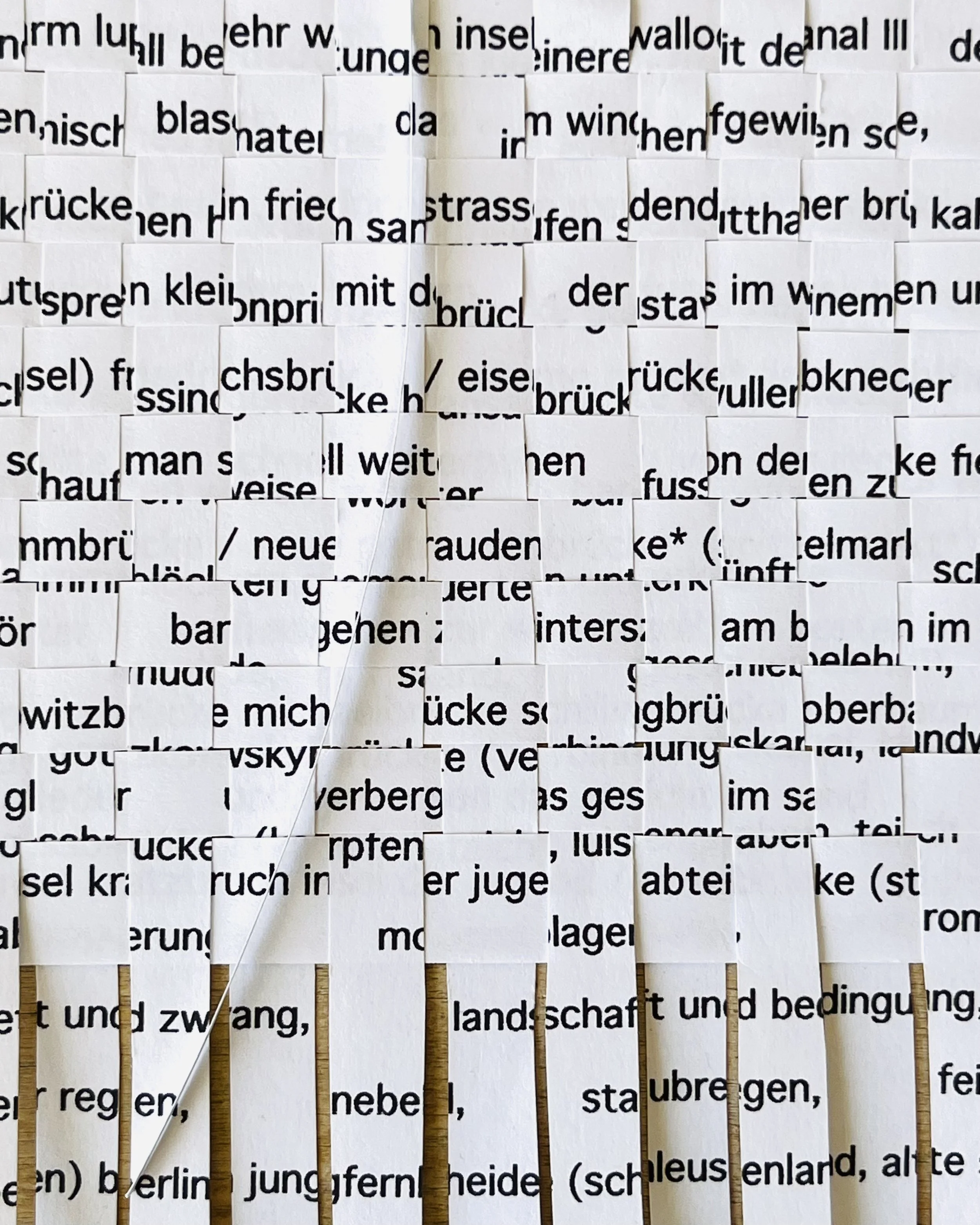
field names, bridge names, islands. sediments, steps, dance, refrains, stories of mud, glacial till, sand. tape recorder and protagonist
===========
plan / timetable:
week 1
working with 'my' field names / words
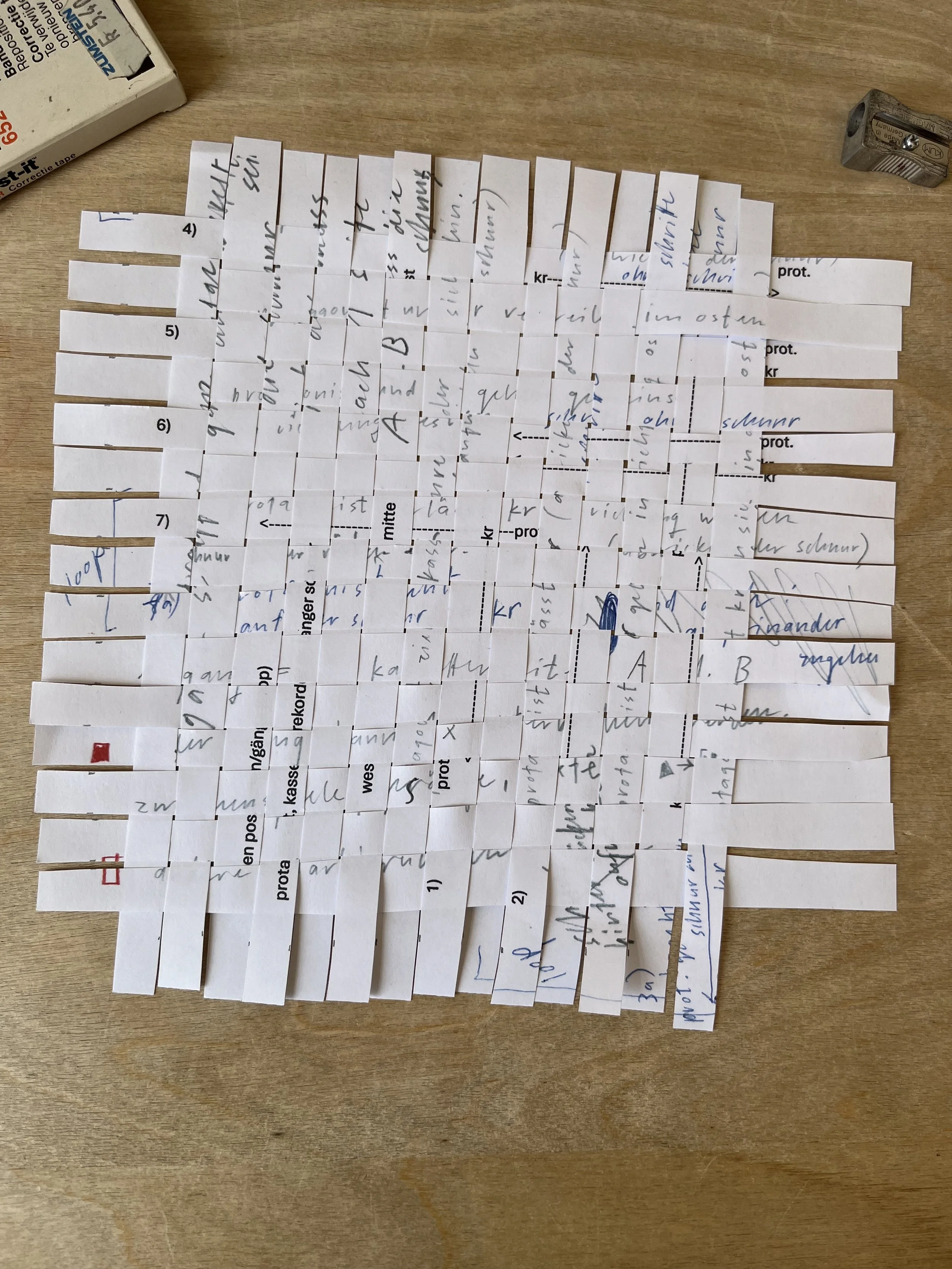
finding ways of notation / audio-score
week 2
try outs with scores / audio-scores
working on the steps forward and backward. rhythms
week 3
planing, including the landscape. inserts, islands of a totally other land and language.
implanting 'my' fieldnames in the landscape. visuals and audio
week 4
translating the landscape here and there. notation
week 5
dramaturgy of the piece
week 6
translating words to instruments (percussion)
week 7 and 8
putting all together, finishing